Best Hair Colour Ideas for Women – Discover Trending Hair Shades That Suit Your Skin Tone
Choosing a beautiful hair colour can refresh your appearance and highlight your personal style. However, selecting the right shade is not always easy. A colour that looks attractive in photographs may appear different depending on your skin tone, natural hair pigmentation, and lighting. Exploring the Best Hair Colour Ideas for Women can help you discover shades that complement your preferences.
Modern hair colour trends include chocolate brown, caramel highlights, cherry red, copper, soft blonde, and glossy black. Many women prefer natural-looking colours that add dimension without requiring dramatic changes. Others enjoy experimenting with fashionable shades that create a completely different appearance.
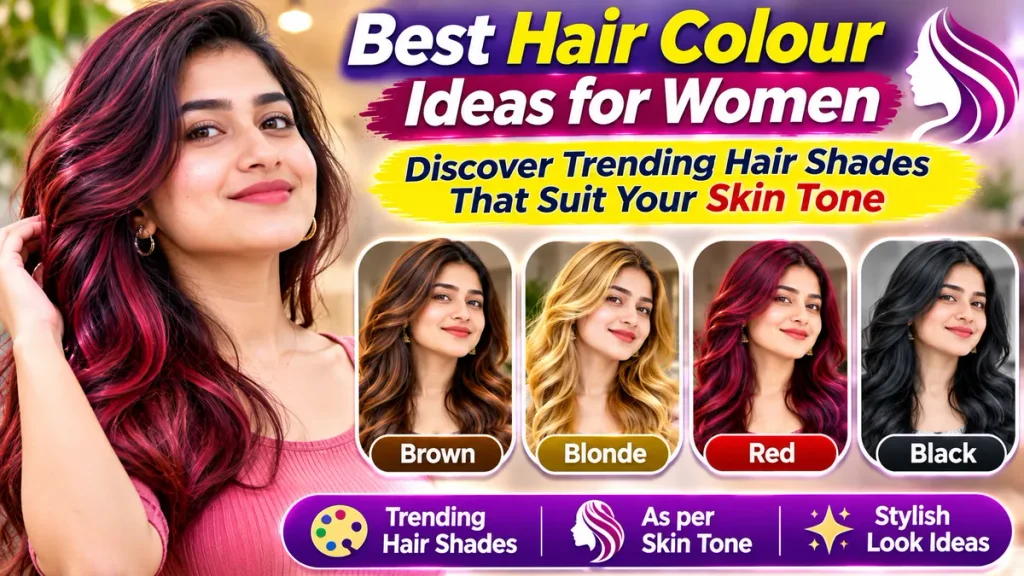
Whether you want subtle highlights or a bold transformation, understanding Hair Colour Shades for Different Skin Tones can make choosing easier. This guide explores fashionable colours, undertone considerations, maintenance requirements, and practical tips for selecting a suitable shade.
Why Does Skin Tone Matter When Choosing Hair Colour?
Skin tone and undertone can influence how a particular hair colour appears beside your face.
Skin tone generally describes visible complexion depth, while undertone refers to the underlying warm, cool, or neutral characteristics of the skin.
Common undertone categories include:
- Warm undertones.
- Cool undertones.
- Neutral undertones.
Warm undertones may complement golden brown, copper, and caramel shades.
Cool undertones can create attractive combinations with ash brown, burgundy, and certain blonde shades.
Neutral undertones offer flexibility across different colour families.
However, these are styling suggestions rather than strict rules. Personal preferences are equally important.
Best Trending Hair Colour Ideas for Women
Several beautiful shades are popular in contemporary hair colouring, including the following options.
1. Chocolate Brown Hair Colour
Chocolate brown is a rich, natural-looking shade that suits many different complexions.
It offers a softer alternative to black while maintaining a darker appearance.
Why Explore This Shade?
- Creates a rich brunette appearance.
- Works with different haircut lengths.
- Offers subtle colour transformation.
- Can be combined with highlights.
Chocolate brown is especially appealing for women who prefer understated hairstyles.
2. Caramel Highlights
Caramel highlights introduce warm golden-brown accents into darker hair.
They can create dimension around the face and throughout layered hairstyles.
Popular Features:
- Warm, blended appearance.
- Suitable for many brunette bases.
- Can highlight natural waves.
- Available through balayage techniques.
The level of lightening required depends on the starting hair colour.
3. Burgundy Hair Colour
Burgundy combines red and purple tones to create a distinctive appearance.
Dark burgundy can appear subtle indoors while becoming more noticeable under brighter lighting.
This shade is worth exploring for women who want fashionable colour without necessarily choosing bright red.
Regular colour maintenance may be necessary to preserve vibrancy.
4. Copper Hair Colour
Copper features warm reddish-orange tones.
Soft copper, auburn, and burnt copper provide different levels of intensity.
Copper shades can look particularly striking alongside natural waves and layered haircuts.
However, red-based colours may fade noticeably, depending on the dye formulation and washing habits.
5. Golden Blonde Hair Colour
Golden blonde creates a warm, lighter appearance.
It may complement different skin tones depending on the chosen intensity.
Women with naturally dark hair should remember that significant lightening may require bleaching.
Professional assessment can help determine whether the desired shade is achievable safely.
6. Ash Brown Hair Colour
Ash brown combines brunette pigmentation with cooler undertones.
It offers a muted alternative to golden or reddish browns.
This colour may appeal to women seeking a sophisticated, low-key appearance.
Achieving an ash finish on warm or previously coloured hair may require professional colour correction.
7. Cherry Mocha Hair Colour
Cherry mocha combines a brunette base with subtle red or cherry undertones.
It provides depth while introducing noticeable warmth.
This shade is among the contemporary brunette and red colour ideas attracting attention.
The final appearance depends on the starting hair colour and chosen formulation.
Hair Colour and Skin Tone Comparison Table
| Hair Colour | Undertones to Explore With | Appearance |
|---|---|---|
| Chocolate Brown | Warm, neutral | Rich brunette |
| Caramel Highlights | Warm, neutral | Golden-brown dimension |
| Burgundy | Cool, neutral | Deep reddish-purple |
| Copper | Warm, neutral | Reddish-orange warmth |
| Golden Blonde | Warm, neutral | Soft golden finish |
| Ash Brown | Cool, neutral | Muted brunette |
| Cherry Mocha | Warm, cool, neutral | Dark brunette with red tones |
| Glossy Black | All undertones | Deep, polished colour |
Note: Every shade can be adapted for different complexions. This table offers inspiration, not fixed beauty rules.
How to Choose the Best Hair Colour for Your Skin Tone
Selecting a suitable colour involves several considerations.
Step 1: Identify Your Natural Hair Colour
Consider your existing shade and previous chemical treatments.
Step 2: Explore Your Skin Undertone
Compare warm, cool, and neutral colours in natural lighting.
Step 3: Choose Your Preferred Colour Family
Explore brunette, blonde, red, copper, or black shades.
Step 4: Try Virtual Colour Previews
Use a trusted virtual hair colour application to compare possible looks.
Step 5: Consider Maintenance
Think about touch-ups, fading, salon expenses, and styling requirements.
Step 6: Assess Hair Condition
Dry or damaged hair may require additional care before chemical colouring.
Step 7: Consult a Professional
Discuss the desired shade, achievable results, and colouring process with a qualified colourist.
Popular Hair Colour Techniques
Different colouring methods create different effects.
| Technique | Main Appearance |
|---|---|
| Global Colour | One main shade throughout the hair |
| Highlights | Selected lighter strands |
| Balayage | Hand-painted blended highlights |
| Ombre | Gradual transition between colours |
| Babylights | Fine, subtle highlights |
| Root Shadow | Softer transition around the roots |
Choosing a technique depends on personal style, budget, and maintenance preferences.
How to Maintain Coloured Hair
Proper care can help maintain colour appearance and reduce unnecessary damage.
Use shampoo and conditioner suitable for colour-treated hair.
Limit excessive heat styling and use heat protection when appropriate.
Avoid harsh brushing and frequent chemical processing.
Protect coloured hair from prolonged sun exposure.
Follow professional recommendations regarding colour refresh appointments.
Remember that bleaching and repeated colouring can weaken hair strands.
Can You Try Hair Colours Before Dyeing?
Yes. Virtual hair colour applications allow users to upload photographs and experiment with different shades.
Some tools also provide live-camera colour previews.
These simulations can help compare chocolate brown, blonde, burgundy, and other fashionable options.
However, digital previews cannot guarantee identical salon results.
Natural pigmentation, lighting, previous treatments, and dye chemistry influence the final appearance.
Frequently Asked Questions (FAQs)
1. What are the best hair colour ideas for women?
Chocolate brown, caramel highlights, burgundy, copper, golden blonde, ash brown, and cherry mocha are attractive options worth exploring.
2. Which hair colour suits Indian skin tones?
Many shades can complement Indian complexions, including chocolate brown, caramel, copper, and burgundy. Individual undertone and preference matter.
3. Which hair colour requires less maintenance?
Shades closer to your natural hair colour and softly blended highlights may require less frequent visible root maintenance.
4. Can I try hair colour before dyeing?
Yes. Virtual hair colour tools allow users to preview different shades using photographs.
5. Does blonde hair require bleaching?
Naturally dark hair often requires lightening to achieve noticeably blonde shades. The process depends on the desired result.
6. Can hair colouring damage hair?
Yes. Chemical colouring, especially repeated bleaching, may cause dryness, breakage, and irritation.
Conclusion
Exploring the Best Hair Colour Ideas for Women can help you discover attractive shades that complement your appearance and personal preferences. Chocolate brown, caramel highlights, burgundy, copper, golden blonde, and cherry mocha offer different styling possibilities.
Before colouring your hair, consider your natural pigmentation, skin undertone, maintenance requirements, and existing hair condition. Virtual colour previews and professional guidance can help you make informed choices while protecting your hair’s overall health.
Disclaimer
This article is provided for general educational and informational purposes only. Hair colour trends, styling preferences, and individual results may vary. Suggested colour combinations are not universal rules, and no particular shade is guaranteed to suit everyone. Chemical hair dyes and bleaching products may cause allergic reactions, scalp irritation, or hair damage. Readers should follow manufacturer instructions, complete recommended allergy testing, and consult a qualified hairstylist or dermatologist when appropriate. Virtual hair colour previews are illustrative and may differ from actual colouring results.