Hair Growth Treatment – Explore Effective Options for Thinning Hair and Hair Regrowth
Hair thinning and hair loss are common concerns affecting men and women of different ages. Noticing a widening hair part, receding hairline, or increased shedding can be worrying. Choosing an effective Hair Growth Treatment requires understanding why hair loss occurs and which treatments have scientific evidence supporting their benefits.
Hair growth depends on genetics, hormones, nutrition, scalp health, and underlying medical conditions. Some types of thinning are temporary, while others develop gradually and require long-term management. Using expensive shampoos or supplements without identifying the cause may produce disappointing results.
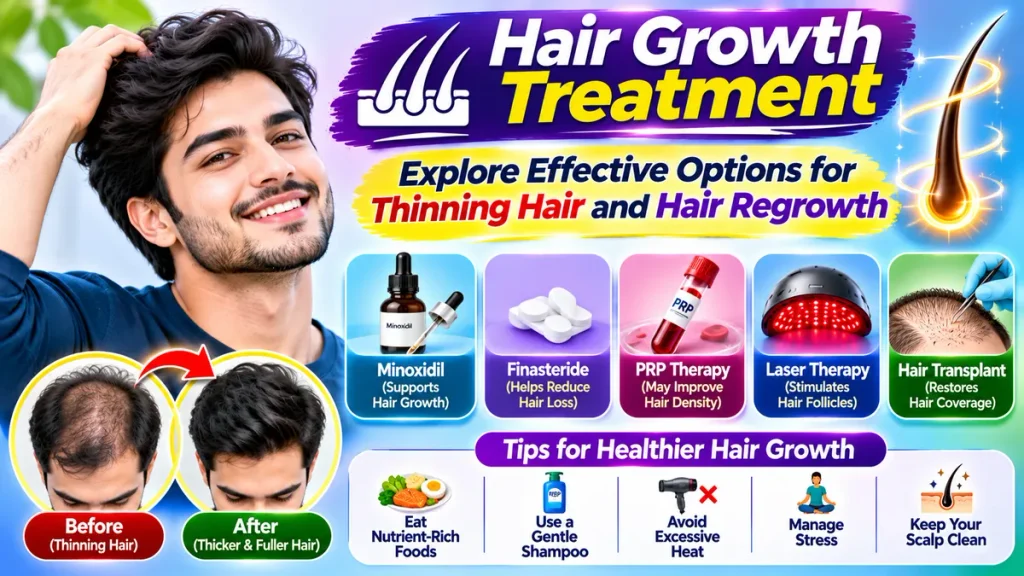
Fortunately, several Hair Regrowth Treatments may help suitable patients maintain existing hair or encourage regrowth. This guide explores medically recognized treatments, lifestyle considerations, dermatologist procedures, and practical ways to improve overall hair health.
What Causes Hair Thinning and Hair Loss?
Hair follicles naturally cycle through growth, transition, resting, and shedding stages. Losing approximately 50–100 hairs daily is generally considered normal.
Excessive shedding or progressive thinning may occur because of several conditions.
Common causes include:
- Hereditary pattern hair loss.
- Hormonal changes.
- Iron deficiency.
- Thyroid disorders.
- Significant physical or emotional stress.
- Rapid weight loss.
- Certain medications.
- Autoimmune conditions.
- Scalp inflammation or infections.
Identifying the underlying cause is essential because treatments differ considerably.
Best Hair Growth Treatments for Thinning Hair
Several medical treatments may help selected types of hair loss.
1. Minoxidil – Treatment for Pattern Hair Loss
Topical minoxidil is an established treatment for certain types of male and female pattern hair loss.
It may help maintain existing hair and stimulate regrowth in suitable individuals.
Important Benefits:
- May slow progressive thinning.
- Can encourage hair regrowth.
- Available in topical formulations.
- May improve hair density with continued use.
Results usually require several months, and some individuals experience scalp irritation or temporary increased shedding.
Treatment benefits generally diminish after discontinuation.
Follow product instructions and seek medical advice when appropriate, especially during pregnancy or breastfeeding.
2. Finasteride – Prescription Hair Loss Treatment
Finasteride is a prescription medicine commonly used for male pattern hair loss.
It reduces the production of dihydrotestosterone, a hormone involved in hereditary hair thinning.
Important Information:
- May slow male pattern hair loss.
- Can improve hair growth in some patients.
- Requires ongoing treatment.
- May cause sexual or mood-related adverse effects.
Finasteride is unsuitable for certain individuals and should be used only under appropriate medical supervision.
Pregnant individuals should avoid handling crushed or broken tablets.
3. Platelet-Rich Plasma (PRP) Therapy
Platelet-rich plasma therapy involves processing a patient’s blood and injecting platelet-rich material into selected scalp areas.
Some studies suggest PRP may improve hair density in individuals with pattern hair loss.
However, results vary, treatment protocols differ, and repeat procedures may be necessary.
4. Low-Level Laser Therapy
Low-level laser therapy uses specialized light-emitting devices to stimulate hair follicles.
Some clinical studies suggest modest improvements in hereditary hair loss.
Results vary, and repeated sessions are usually necessary.
These devices should not replace appropriate medical evaluation.
Hair Growth Treatment Comparison Table
| Treatment | Potential Benefit | Important Consideration |
|---|---|---|
| Topical Minoxidil | Supports growth in pattern hair loss | Requires ongoing application |
| Finasteride | Slows certain male pattern hair loss | Prescription medicine |
| PRP Therapy | May improve hair density | Repeat clinical procedures |
| Low-Level Laser | May support modest regrowth | Multiple sessions required |
| Hair Transplant | Restores coverage using transplanted follicles | Surgical procedure |
| Nutritional Treatment | Addresses deficiency-related shedding | Testing may be necessary |
Note: Treatment effectiveness depends on the diagnosis, individual health, and treatment adherence.
Can Hair Transplant Surgery Restore Hair?
Hair transplantation moves suitable hair follicles from donor areas to thinning or balding regions.
Common techniques include follicular unit extraction and follicular unit transplantation.
A transplant may provide lasting coverage in appropriately selected patients.
However, surgery involves recovery time, financial costs, and potential complications.
Existing non-transplanted hair may continue thinning.
A qualified specialist should evaluate donor hair availability, expectations, and long-term treatment needs.
How to Improve Hair Health Naturally
Healthy daily habits can reduce avoidable hair damage and support normal hair growth.
Step 1: Maintain Balanced Nutrition
Eat sufficient protein and include varied nutrient-rich foods.
Step 2: Use Gentle Shampoo
Choose cleansing products suitable for your scalp.
Step 3: Apply Conditioner
Condition hair lengths to reduce friction and breakage.
Step 4: Reduce Excessive Heat
Limit frequent straightening and high-temperature styling.
Step 5: Avoid Tight Hairstyles
Repeated pulling can contribute to traction-related hair loss.
Step 6: Manage Underlying Conditions
Seek appropriate care for diagnosed nutritional, thyroid, or scalp disorders.
Step 7: Track Hair Changes
Take periodic photographs under consistent lighting to monitor progression.
Important Nutrients for Healthy Hair
Balanced nutrition supports normal follicle function and hair growth.
| Nutrient | Common Food Sources |
|---|---|
| Protein | Eggs, fish, pulses, paneer |
| Iron | Lentils, beans, meat |
| Zinc | Nuts, seeds, legumes |
| Vitamin B12 | Eggs, dairy, fish |
| Vitamin D | Fortified foods, fatty fish |
| Essential Fatty Acids | Fish, walnuts, flaxseeds |
Supplements are most useful when a relevant deficiency or medical indication exists.
Excessive supplementation can cause adverse effects, and certain nutrients may worsen hair shedding when taken unnecessarily.
When Should You Consult a Dermatologist?
Consult a qualified dermatologist if you experience sudden shedding, expanding bald patches, or persistent thinning.
Medical attention is particularly important when hair loss occurs with scalp pain, redness, scaling, or unexplained symptoms.
A dermatologist may examine the scalp, review medications, and recommend targeted investigations.
Some conditions, including alopecia areata, require treatments different from those used for hereditary hair loss.
Early diagnosis may improve treatment opportunities.
Common Hair Growth Treatment Mistakes
Avoid products promising complete hair restoration within days.
Do not assume every hair oil promotes follicle regrowth.
Avoid taking high-dose biotin, iron, or other supplements without medical justification.
Do not discontinue prescribed medication without professional advice.
Remember that visible hair regrowth usually takes time.
Comparing photographs taken under different lighting can also create misleading impressions about treatment progress.
Frequently Asked Questions (FAQs)
1. What is the best hair growth treatment?
The best treatment depends on the cause. Minoxidil and selected prescription medicines have evidence for certain types of pattern hair loss.
2. Can thinning hair grow back?
Some types of thinning improve with appropriate treatment. Regrowth depends on follicle health, diagnosis, and individual response.
3. How long does hair regrowth treatment take?
Many treatments require several months before noticeable results appear. Improvement is not guaranteed.
4. Does hair oil help regrow lost hair?
Hair oils may improve conditioning and reduce breakage, but they are not proven cures for hereditary baldness.
5. Can nutritional deficiencies cause hair loss?
Yes. Certain deficiencies may contribute to shedding. Medical evaluation can identify whether supplementation is appropriate.
6. Is hair transplantation permanent?
Transplanted follicles may provide lasting growth, but surrounding natural hair can continue thinning over time.
Conclusion
Finding an effective Hair Growth Treatment begins with identifying the underlying cause of thinning hair. Evidence-based medications, appropriate medical procedures, balanced nutrition, and gentle hair care can help manage certain forms of hair loss.
Minoxidil, prescription treatments, PRP therapy, laser devices, and hair transplantation offer different possibilities for suitable patients. Consult a qualified dermatologist, establish realistic expectations, and follow an individualized treatment plan for healthier hair management.
Disclaimer
This article is provided for general educational and informational purposes only and does not constitute medical advice, diagnosis, or treatment. Hair growth treatments vary in effectiveness, safety, and suitability depending on individual circumstances. Medicines such as minoxidil and finasteride can cause adverse effects and are not appropriate for everyone. PRP therapy, laser treatment, and hair transplantation may involve limitations, costs, and complications. Readers should consult a qualified dermatologist before starting medications, supplements, or clinical procedures. No treatment guarantees complete hair regrowth or permanent prevention of future hair loss.