Hair Spa Treatment at Home – Easy Ways to Nourish Your Hair and Improve Its Appearance
Healthy, soft, and manageable hair can improve your overall appearance and confidence. However, frequent heat styling, pollution, chemical treatments, and unsuitable hair care habits can leave hair feeling dry, rough, and difficult to manage. A Hair Spa Treatment at Home offers a convenient way to condition your hair, reduce tangling, and improve its appearance without regularly visiting an expensive salon.
Home hair spa routines usually combine gentle cleansing, conditioning, scalp care, and moisturizing hair masks. These simple steps can help make hair feel smoother, softer, and easier to style. Choosing products according to your hair texture and scalp condition is important for achieving comfortable results.
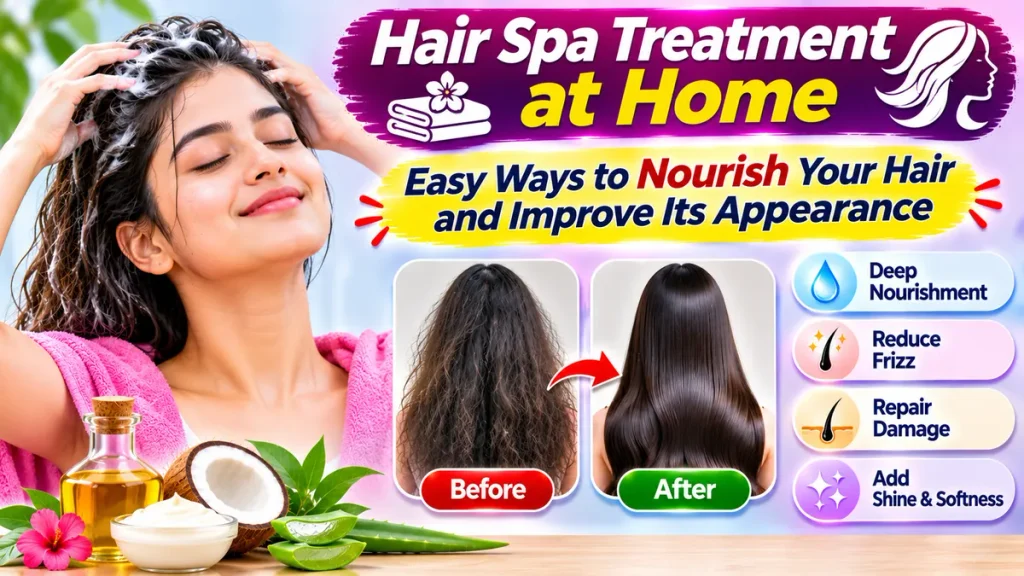
Whether you have dry, frizzy, curly, or chemically treated hair, a DIY Hair Spa Treatment can become part of your regular hair care routine. This guide explains home hair spa methods, useful ingredients, treatment options, and practical tips for maintaining healthier-looking hair.
What Is a Hair Spa Treatment at Home?
A home hair spa is a conditioning routine designed to improve hair softness, manageability, and overall appearance.
It generally involves washing, applying conditioning products, gentle scalp massage, and careful detangling.
Unlike medical hair treatments, a home hair spa mainly focuses on cosmetic care.
Common benefits include:
- Softer and smoother hair.
- Improved hair manageability.
- Reduced tangling and friction.
- Temporary frizz control.
- Better-looking hair shine.
- Relaxing scalp massage.
- Improved conditioning of dry ends.
Results depend on hair type, product selection, and existing damage.
Why Does Hair Become Dry and Frizzy?
Hair can become dry when its surface loses protective lubrication or experiences repeated damage.
Common contributing factors include:
- Frequent straightening and blow-drying.
- Chemical coloring and bleaching.
- Excessive shampooing with unsuitable products.
- Rough towel drying.
- Environmental exposure.
- Inadequate conditioning.
- Repeated brushing or friction.
Naturally curly hair may also experience dryness because scalp oils do not distribute evenly along the strands.
Understanding your hair type helps you select appropriate conditioning products.
Best Hair Spa Treatments You Can Try at Home
Several simple treatments can improve hair feel and manageability.
1. Deep Conditioning Hair Spa
Deep conditioning is particularly useful for dry or rough hair.
A conditioning mask contains ingredients designed to lubricate strands and improve their surface texture.
Potential Benefits:
- Improves softness.
- Helps reduce tangling.
- Makes hair easier to comb.
- Temporarily controls visible frizz.
Apply the product according to its instructions, concentrating on the lengths and ends.
2. Coconut Oil Pre-Wash Treatment
Coconut oil may help reduce protein loss from hair under certain conditions.
It can also provide lubrication before shampooing.
Apply a small amount to suitable hair lengths before washing.
Avoid excessive application if your hair becomes greasy easily.
People with sensitive skin should discontinue use if irritation develops.
3. Moisturizing Hair Mask
Commercial moisturizing masks can improve the appearance of dry strands.
Many contain conditioning agents, fatty alcohols, oils, and ingredients that help reduce friction.
Choose a formula suitable for your hair texture.
Avoid assuming that homemade ingredients are automatically safer than professionally formulated products.
4. Leave-In Conditioning Treatment
Leave-in conditioners and serums provide additional lubrication after washing.
They may help reduce flyaways, tangles, and humidity-related frizz.
Use small amounts, especially on fine hair.
These products improve appearance but cannot permanently repair severely damaged strands.
Hair Spa Treatment Comparison Table
| Hair Spa Method | Main Benefit | Suitable Hair Concern |
|---|---|---|
| Deep Conditioning Mask | Softness and detangling | Dry, rough hair |
| Coconut Oil Pre-Wash | Lubrication and reduced protein loss | Suitable dry hair |
| Moisturizing Conditioner | Smoother hair surface | Frizzy hair |
| Leave-In Conditioner | Easier styling | Tangled hair |
| Hair Serum | Temporary frizz control | Flyaways and rough ends |
| Gentle Scalp Massage | Relaxation | General scalp comfort |
Note: Hair spa routines provide cosmetic benefits and are not guaranteed treatments for hair loss.
How to Do Hair Spa Treatment at Home Step by Step
A simple home hair spa routine does not require expensive equipment.
Step 1: Detangle Your Hair
Gently remove knots using a suitable comb before washing.
Step 2: Apply a Pre-Wash Product
If desired, apply a suitable conditioning oil to the hair lengths.
Step 3: Wash Your Scalp
Use a gentle shampoo and massage the scalp using your fingertips.
Step 4: Apply a Hair Mask
Distribute a conditioning mask through the lengths and ends.
Step 5: Follow Product Instructions
Leave the mask on for the recommended duration. Excessively long application is unnecessary.
Step 6: Rinse Thoroughly
Remove the product using lukewarm water.
Step 7: Apply Leave-In Care
Use an appropriate leave-in conditioner or serum when needed.
Step 8: Dry Gently
Avoid aggressive towel rubbing and excessive styling heat.
How Often Should You Do Hair Spa at Home?
The ideal frequency depends on hair texture, condition, and product formulation.
Dry or curly hair may benefit from occasional additional conditioning.
Fine or oily hair may require lighter products to avoid buildup.
Follow the manufacturer’s instructions rather than assuming every mask should be applied weekly.
If products cause itching, redness, or excessive greasiness, discontinue use and reconsider your routine.
Hair Spa Benefits for Different Hair Types
| Hair Type | Suggested Approach |
|---|---|
| Dry Hair | Rich conditioner and moisturizing mask |
| Frizzy Hair | Smoothing conditioner and leave-in care |
| Curly Hair | Gentle detangling and suitable conditioning |
| Oily Hair | Lightweight conditioner on hair lengths |
| Colored Hair | Color-compatible conditioning products |
| Fine Hair | Lightweight treatments without heavy buildup |
Hair products should be selected according to individual needs.
Common Hair Spa Mistakes to Avoid
Applying too much product can leave hair greasy and difficult to manage.
Avoid excessively hot water, as it may worsen dryness.
Do not aggressively massage an irritated scalp.
Avoid very hot oil treatments because they can cause burns.
Using lemon juice, concentrated essential oils, or irritating homemade mixtures may damage sensitive skin.
Remember that conditioning treatments cannot permanently repair split ends.
Tips to Maintain Soft and Manageable Hair
Use conditioner after shampooing.
Limit frequent chemical treatments and excessive heat styling.
Avoid tight hairstyles that repeatedly pull the hair.
Use a wide-tooth comb when appropriate.
Protect hair from unnecessary friction.
Maintain balanced nutrition and adequate protein intake.
Persistent scalp problems or unusual shedding should be evaluated by a healthcare professional.
Frequently Asked Questions (FAQs)
1. What is the best hair spa treatment at home?
A gentle cleansing routine followed by a suitable deep conditioner is a practical option for many people.
2. Can hair spa treatments reduce hair fall?
Conditioning may reduce breakage, but it does not treat common medical causes of hair loss.
3. Can I do hair spa at home without salon products?
A basic routine can use ordinary shampoo and conditioner. Specialized masks are optional.
4. How often should I use a hair mask?
Frequency depends on the product and hair type. Follow the manufacturer’s instructions.
5. Is coconut oil suitable for a home hair spa?
Coconut oil may condition suitable hair types, but it can feel heavy and may irritate some individuals.
6. Can hair spa permanently repair damaged hair?
No. Conditioning can improve appearance and manageability, but severely damaged hair cannot fully restore its original structure.
Conclusion
A Hair Spa Treatment at Home is a convenient way to improve hair softness, reduce tangling, and maintain healthier-looking strands without frequent salon appointments. Gentle cleansing, suitable conditioning masks, careful detangling, and reduced heat exposure can make a noticeable difference in everyday hair management.
Choose treatments according to your hair type, avoid irritating ingredients, and maintain a consistent routine. Although home hair spa methods can improve appearance, persistent hair loss or scalp disorders require professional evaluation.
Disclaimer
This article is intended for general educational and informational purposes only and does not constitute medical advice, diagnosis, or treatment. Home hair spa routines, conditioning products, and natural oils may produce different results depending on hair texture, scalp condition, and individual sensitivities. These methods cannot guarantee permanent repair of damaged hair, prevention of hair loss, or hair regrowth. Some ingredients may cause irritation or allergic reactions. Readers should follow product instructions, perform appropriate sensitivity checks, avoid excessively hot treatments, and consult a qualified dermatologist for persistent scalp problems or unusual hair loss.